

Start with your FSA ID
Before you log into fafsa.gov to begin your FAFSA Guide walkthrough, you need an FSA ID. This ID acts as your digital signature, allowing you to sign your application electronically and access your FAFSA data online. Without it, you cannot complete the form or view your financial aid status.
Processing delays are common. The system needs time to verify your identity and send a confirmation email to the address you provide. If you wait until the last minute to create your account, you risk missing early state or institutional aid deadlines. Do not treat this as a quick checkbox; treat it as the first step in a multi-day process.
The FSA ID is distinct for every user. Students and parents must create separate accounts. Even if you share a computer or email address, each person needs their own unique login credentials. This separation ensures that each individual’s data remains secure and that signatures are legally binding for the specific user.
Visit fsaid.ed.gov. Enter your legal name, date of birth, and Social Security number. If you are a U.S. citizen, this is the primary identifier. If you are a non-citizen, you will need your Alien Registration Number. Follow the prompts to create a username and password.
Check your email for a confirmation link. Click the link to activate your account. You may be asked security questions to verify your identity. Complete these steps before you attempt to log in to fafsa.gov for the first time.

If you are a dependent student, your parent must also create an FSA ID. They should create their own account separately. Do not share credentials. This allows them to sign their portion of the FAFSA form independently.
Gather tax and financial records
Before you log in to start your FAFSA Guide application, collect the necessary documents. Having these ready prevents interruptions and ensures accurate data entry.
Tax Returns and W-2s
Gather federal tax returns for the student and parents, if applicable. Include W-2 forms and records of untaxed income. Use the IRS Data Retrieval Tool to transfer this data directly into the FAFSA Guide form.
Bank Statements and Investments
Collect current balances for savings and checking accounts. Note the value of investments, including stocks, bonds, and real estate (excluding the primary home). Business and farm assets must also be reported.
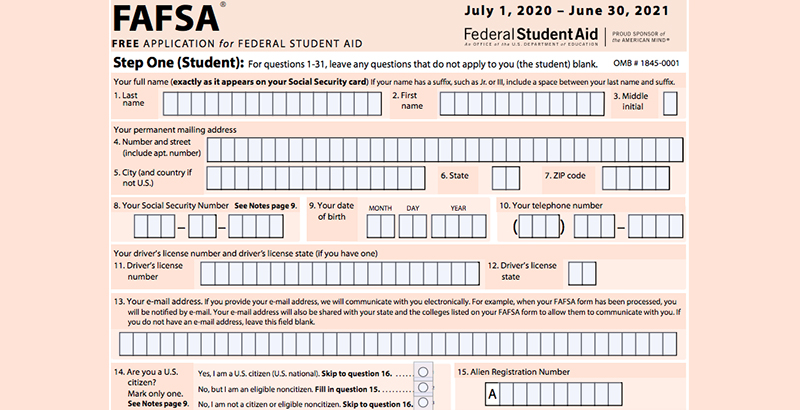
Complete student personal details
FAFSA works best as a clear sequence: define the constraint, compare the realistic options, test the tradeoff, and choose the path with the fewest hidden costs. That order keeps the advice usable instead of decorative. After each step, pause long enough to check whether the recommendation still fits the reader's actual situation. If it depends on perfect timing, unusual access, or a best-case budget, include a simpler fallback.
Enter financial aid information
FAFSA works best as a clear sequence: define the constraint, compare the realistic options, test the tradeoff, and choose the path with the fewest hidden costs. That order keeps the advice usable instead of decorative. After each step, pause long enough to check whether the recommendation still fits the reader's actual situation. If it depends on perfect timing, unusual access, or a best-case budget, include a simpler fallback.
List colleges and sign the form
FAFSA works best as a clear sequence: define the constraint, compare the realistic options, test the tradeoff, and choose the path with the fewest hidden costs. That order keeps the advice usable instead of decorative. After each step, pause long enough to check whether the recommendation still fits the reader's actual situation. If it depends on perfect timing, unusual access, or a best-case budget, include a simpler fallback.
Avoid common filing mistakes
The easiest mistake with FAFSA is comparing options on the most visible detail while ignoring the day-to-day constraint. A choice can look strong on paper and still fail because it is too hard to maintain, too expensive to repeat, or awkward in the actual setting. Use the same checklist for every option: fit, cost, durability, timing, upkeep, and fallback plan. That keeps the comparison practical instead of drifting into preference alone.
The simplest way to use this section is to write down the real constraint first, compare each option against it, and choose the path that still works outside ideal conditions.
Review your Student Aid Report
FAFSA works best as a clear sequence: define the constraint, compare the realistic options, test the tradeoff, and choose the path with the fewest hidden costs. That order keeps the advice usable instead of decorative. After each step, pause long enough to check whether the recommendation still fits the reader's actual situation. If it depends on perfect timing, unusual access, or a best-case budget, include a simpler fallback.
The simplest way to use this section is to write down the real constraint first, compare each option against it, and choose the path that still works outside ideal conditions.
No comments yet. Be the first to share your thoughts!