
Forgiveness programs changing in 2026
The Supreme Court blocked the plan to cancel up to $20,000 in student debt last year. If you were counting on that relief, the current system is a mess of court challenges and changing rules. While broad cancellation is off the table for now, several specific programs still exist in 2026.
Navigating the current system is frustrating. Since the one-time debt relief plan is dead, you have to rely on older programs or the newer income-driven plans that survived the recent legal battles.
The Department of Education is still working to support borrowers, but the path to forgiveness now relies on existing income-driven repayment plans and specific programs like Public Service Loan Forgiveness. Understanding these options is more important than ever. We’ll break down the details, eligibility requirements, and potential benefits of each program to help you determine the best course of action.

Income-driven repayment options
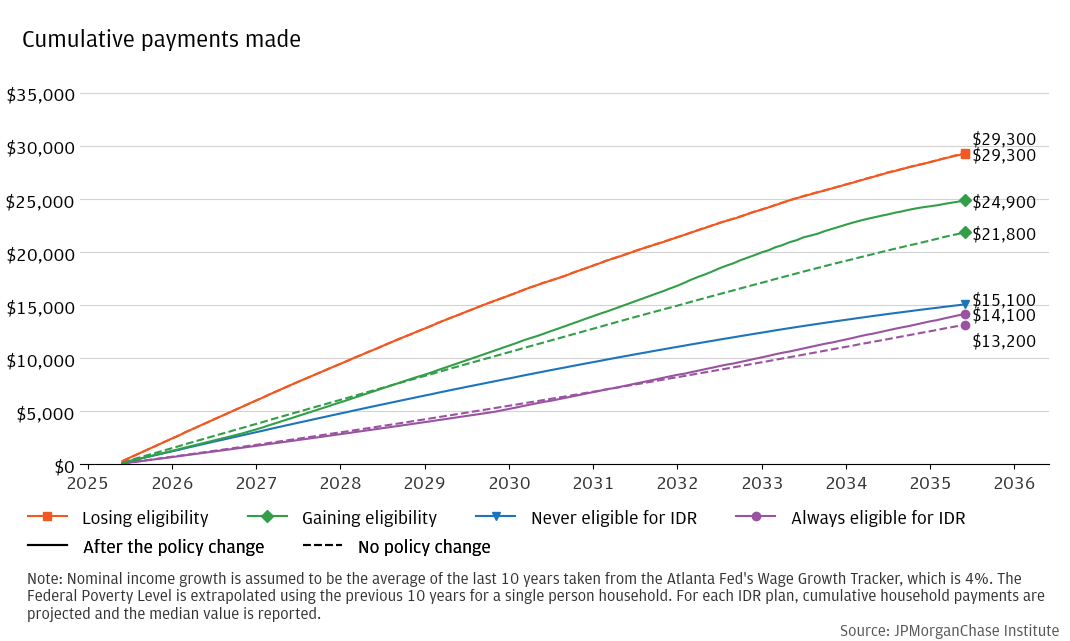
Income-Driven Repayment (IDR) plans base your monthly bill on what you earn and how many people live in your house. There are four versions: SAVE, IBR, ICR, and PAYE. Each has different math for how they calculate your payment and when they wipe the remaining balance.
Eligibility often depends on your loan type—specifically whether they are Direct Loans. Parent PLUS loans and Federal Family Education Loan (FFEL) Program loans generally need to be consolidated into a Direct Consolidation Loan to qualify for most IDR plans. Your income and family size are the primary factors in determining your monthly payment amount. Generally, payments are capped at 10% to 20% of your discretionary income.
Discretionary income is calculated by subtracting a portion of the poverty guideline for your family size from your adjusted gross income (AGI). The percentage of discretionary income used for payments varies by plan. For example, the SAVE plan starts at 10% and will decrease over time. Forgiveness under IDR plans typically occurs after 20 or 25 years of qualifying payments, depending on the plan and the original loan type.
Here's a quick look at the plans: SAVE generally offers the lowest payments and fastest path to forgiveness for many. IBR is available for borrowers with certain loan types and offers forgiveness after 25 years. ICR is available to anyone with eligible loans but often results in higher payments. PAYE offers forgiveness after 20 years but has stricter income requirements.
- SAVE: Payments are 10% of discretionary income (dropping to 5% for undergrad loans) with forgiveness after 20 or 25 years.
- IBR: 10% or 15% of discretionary income, forgiveness after 25 years.
- ICR: 20% of discretionary income, forgiveness after 25 years.
- PAYE: 10% of discretionary income, forgiveness after 20 years (strict income requirements).
Public service loan forgiveness
Public Service Loan Forgiveness (PSLF) offers forgiveness to borrowers who work full-time for a qualifying employer in public service. This includes federal, state, local, and tribal government organizations, as well as certain non-profit organizations. To qualify, you must have Direct Loans (or consolidate other loan types into a Direct Loan), be on an income-driven repayment plan, and make 120 qualifying payments.
A temporary expansion of PSLF rules, implemented in October 2021, allowed borrowers to count past payments towards forgiveness that previously didn’t qualify. This was a significant benefit for many borrowers who had been working in public service for years. While the initial period for this expansion has passed, the Department of Education continues to process applications under the expanded rules as of early 2024.
Common mistakes that disqualify borrowers from PSLF include not having qualifying loans, not being on an income-driven repayment plan, or having payments that weren’t considered "qualifying" due to incorrect certification or payment plan issues. It's essential to submit Employment Certification Forms annually and to carefully track your qualifying payments. Qualifying employment is defined as working full-time (at least 30 hours per week) for a qualifying employer.
Determining what counts as qualifying employment can be tricky. Generally, the organization must be a government entity or a 501(c)(3) non-profit organization. Certain types of employment within these organizations may not qualify, so it’s crucial to verify your employer’s eligibility using the PSLF Help Tool on the Federal Student Aid website.
Teacher loan forgiveness
Teacher Loan Forgiveness is a separate program from PSLF, specifically designed for teachers who work full-time for five consecutive years in a low-income school. Qualifying teachers can receive up to $17,500 in forgiveness on Direct Subsidized and Unsubsidized Loans and Stafford Loans. The amount of forgiveness varies depending on the subject taught—$17,500 for highly qualified math, science, and special education teachers, and $5,000 for other qualifying teachers.
Unlike PSLF, Teacher Loan Forgiveness does not require enrollment in an income-driven repayment plan. However, only Direct Loans and Stafford Loans are eligible. Parent PLUS loans and FFEL loans are not eligible for Teacher Loan Forgiveness. Meeting the requirements can be challenging, as documentation of employment and school status is crucial.
Teachers often face difficulties documenting their qualifying employment and ensuring their school meets the low-income criteria. Resources are available to help teachers navigate the application process, including the Teacher Loan Forgiveness Centralized Determination System and guidance from the Department of Education.
Disability discharge
The Total and Permanent Disability (TPD) discharge program provides loan forgiveness to borrowers who are unable to work due to a total and permanent disability. To qualify, borrowers must provide documentation from a physician, the Social Security Administration, or the Department of Veterans Affairs verifying their disability.
The application process can be emotionally challenging, requiring borrowers to share sensitive medical information. Once a discharge is approved, borrowers enter a three-year monitoring period. During this time, the Department of Education monitors the borrower’s income to ensure their disability remains permanent. If income exceeds a certain threshold, the discharge may be revoked.
Borrowers can appeal if their discharge is revoked during the monitoring period. The TPD discharge program offers a lifeline for borrowers facing significant financial hardship due to disability. It’s important to be aware of the requirements and the potential for monitoring and revocation.
State-specific programs
In addition to federal programs, many states offer their own student loan repayment assistance and forgiveness programs. These programs often target specific professions, such as doctors, lawyers, nurses, and teachers, to address workforce shortages in critical fields. The eligibility requirements and benefits vary significantly by state.
For example, some states offer loan repayment assistance to healthcare professionals who agree to practice in underserved areas, while others offer forgiveness to lawyers who work in public defender offices. These programs can be a valuable source of relief, but they often have strict eligibility requirements and limited funding.
Finding information about state-based programs can be challenging. The American Student Assistance website () provides a comprehensive directory of state-sponsored programs. It's worth exploring these options in addition to federal programs.
Navigating the Changes: Where to Get Help
If your loan servicer is giving you the runaround, check the Federal Student Aid website directly. It is the most reliable source for checking your specific loan types and seeing which consolidation options you actually have.
The Consumer Financial Protection Bureau (CFPB) () provides resources and tools to help borrowers manage their student loans and avoid scams. Several non-profit organizations, such as The Institute of Student Loan Advisors (), offer free or low-cost student loan counseling.
Be wary of companies that promise immediate loan forgiveness for a fee. These are often scams preying on borrowers’ desperation. The Education Department also has a dedicated page with resources regarding the legal challenges to the SAVE plan: Don't hesitate to seek professional advice if you’re feeling overwhelmed.
State-Based Student Loan Forgiveness Programs (as of late 2023/early 2024)
| State | Profession Targeted | Forgiveness Amount | Key Requirements |
|---|---|---|---|
| California | Teachers, Nurses, Physicians | Up to $10,000 per year for up to 5 years (total $50,000) | Service commitment in a designated Health Professional Shortage Area or low-income school. Specific requirements vary by program. |
| New York | Teachers | Up to $50,000 | Five years of service in a designated New York State school district. Must teach a subject experiencing a shortage. |
| Pennsylvania | Primary Care Practitioners | Up to $100,000 | Agreement to practice in an underserved area for a specified period (typically several years). Program administered through the Pennsylvania Higher Education Assistance Agency (PHEAA). |
| Florida | Teachers in Critical Shortage Areas | Up to $5,000 per year for up to 5 years (total $25,000) | Teaching in a designated critical shortage area and meeting specific performance criteria. Requirements can vary by school district. |
| Michigan | Public Service Employees | Varies, potentially up to the full loan balance | Employment with eligible public service organizations (state or local government, non-profits). Details are dependent on specific program and employer participation. |
| Ohio | Healthcare Professionals | Up to $200,000 | Commitment to practice in an underserved area of Ohio for a minimum of three years. Program administered by the Ohio Department of Health. |
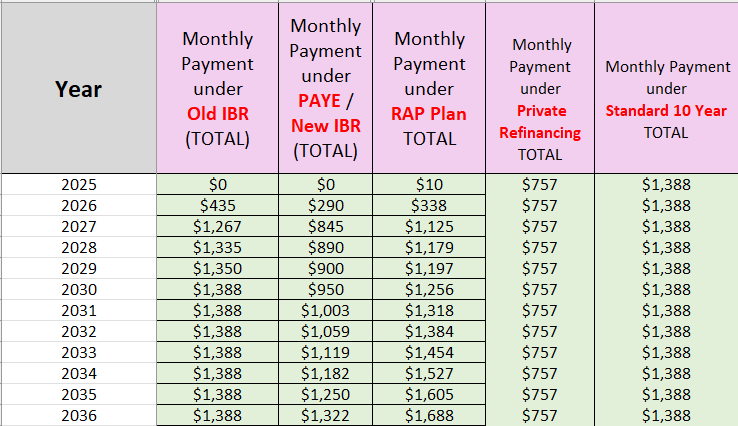
Illustrative comparison based on the article research brief. Verify current pricing, limits, and product details in the official docs before relying on it.
No comments yet. Be the first to share your thoughts!